Guests First, Always: How the Japanese Concept of Omotenashi Is Changing the Way Americans Design Their Homes
Photo: P1898, CC BY 4.0, via Wikimedia Commons
There's a particular kind of hosting that most of us know well: the frantic hour before guests arrive, shoving things into closets, lighting a candle to cover the dog smell, arranging the throw pillows just so for a photo you'll post later. It looks good. It performs well. But does it actually make your guests feel cared for?
A different model exists, and it's been practiced in Japan for centuries.
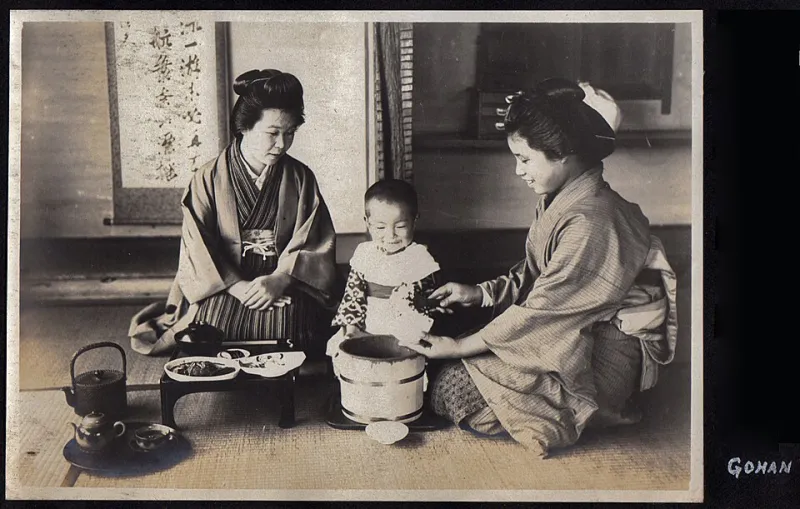
Omotenashi (おもてなし) is one of those Japanese concepts that resists a clean English translation. It's often called "hospitality," but that undersells it. It's closer to wholehearted, selfless attentiveness to a guest's needs—including needs they haven't expressed yet, and maybe don't even know they have. It's the anticipatory cup of tea that appears before you realize you're thirsty. It's the slippers waiting at exactly the right spot. It's a guest room where every detail has been thought through not for aesthetics, but for comfort.
And it's starting to show up in American homes in ways that are subtle, practical, and genuinely transformative.
What Omotenashi Actually Means in a Home Context
In Japan, omotenashi isn't limited to high-end ryokan inns or formal tea ceremonies—though both are famous expressions of it. It lives in everyday homes, in the way a host prepares a space before anyone arrives, in the small signals that tell a guest: I thought about you before you got here.
Interior designer Rachel Ng, who studied in Kyoto before opening her studio in Seattle, describes it as "designing for the guest's experience rather than the homeowner's ego."
"American home design, especially right now, is so focused on how a space photographs," she says. "Omotenashi flips that entirely. You're not asking 'does this look good?' You're asking 'how will someone feel moving through this space?' Those are very different questions."
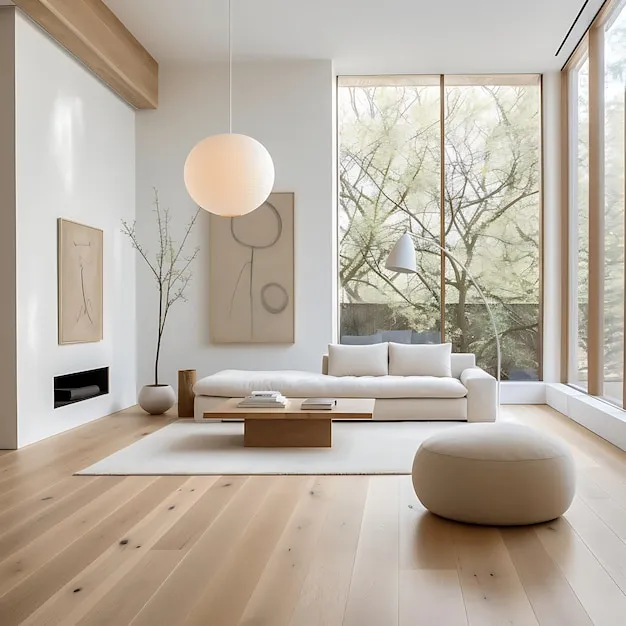
The answers to that second question tend to produce homes that are quieter, less cluttered, more intentional—and, according to the homeowners and designers we spoke with, far more comfortable to actually spend time in.
It Starts at the Door
If there's one place where Japanese hospitality principles are gaining the most traction in American homes, it's the entryway.
In Japan, the genkan—a transitional space between outside and inside where shoes are removed—is a fundamental architectural feature. It's not just a practical gesture (though it does keep floors cleaner). It's a ritual boundary. You leave the outside world at the door, literally. You step up into the home in a different, lighter state.
American homes weren't traditionally built with this in mind, but that's changing. A growing number of homeowners are carving out dedicated entry zones: a low bench for sitting, a tray or mat for shoes, a row of hooks at accessible heights, sometimes a small shelf with a candle or a plant. The message the space sends is immediate—slow down, you're somewhere different now.
"I added a proper entry zone to my townhouse two years ago and the shift in how guests behave when they walk in is remarkable," says Danielle Park, a homeowner in Nashville who worked with a designer to incorporate omotenashi principles after a trip to Japan. "People automatically relax. They take off their shoes without being asked. The whole energy of a visit changes from that first moment."
Some designers are also adding small hospitality touches to entryways: a hook for bags, a mirror at eye level, a small tray with hand lotion or a phone charger. None of it is expensive. All of it says: I expected you, and I'm glad you're here.
The Guest Room as a Complete Thought
In traditional Japanese hospitality, a guest room isn't just a spare bedroom with a mattress and whatever furniture didn't fit elsewhere. It's a considered space—cleared of the host's personal clutter, stocked with what a visitor might need, and arranged so that the guest feels they have genuine privacy and comfort.
This stands in fairly stark contrast to the average American guest room, which, let's be honest, often doubles as a storage unit with a pull-out couch.
Designer Marcus Webb, who runs a residential practice in Austin, has started incorporating what he calls a "guest readiness" checklist into projects. "We think about the guest room the way a good hotel thinks about a room. Is there a place to put a bag? Is there a mirror at a useful height? Is there a lamp on each side of the bed, not just one? Are there extra blankets? Is there somewhere to charge devices?"
But beyond the practical checklist, omotenashi pushes further into the emotional register. A thoughtful Japanese host might put a small seasonal flower arrangement in the guest room—not because it's decorative, but because it signals that the room was prepared for this visit, not just left ready in a generic way.
"That specificity matters," Webb says. "It tells the guest that they were thought about as an individual."
Anticipating Needs Before They're Spoken
One of the most distinctive aspects of omotenashi is that it operates ahead of the ask. A good host doesn't wait for a guest to say they're cold, or thirsty, or need a towel—they've already placed one within easy reach.
This anticipatory quality is something American designers are increasingly building into spaces at the architectural level. Think: a small refrigerator in the guest room stocked with water and a few snacks. A bathroom basket with travel-sized toiletries, a spare toothbrush still in the packaging, pain reliever, a hair tie. A reading lamp with a dimmer. Blackout curtains that actually work.
None of these are radical innovations. But gathering them into a coherent philosophy of guest-first design is something American home culture hasn't historically done in a systematic way.
"We've been so focused on open-plan entertaining spaces—the big kitchen island, the seamless flow to the backyard," says Rachel Ng. "Those spaces are great for parties. But omotenashi is about the individual guest, not the crowd. It's more intimate than that."
Pushing Back Against Performance Hosting
There's a quiet counter-cultural energy to all of this. In an era when hosting has become increasingly performative—staged for social media, optimized for visual impact—omotenashi offers a different set of values entirely.
It's less concerned with how your home looks in a photo and more concerned with how your guest feels in the morning when they wake up and pad to the bathroom. Did they find what they needed? Did they feel at ease? Did the space make them feel genuinely welcomed rather than just aesthetically impressed?
For many homeowners, that reorientation is refreshing.
"I used to spend so much energy on how things looked when people arrived," says Danielle Park. "Now I spend it thinking about what they'll need at 11pm when they're tired, or first thing in the morning before anyone else is up. It's a completely different kind of care. And honestly? It feels more like love."
That might be the most Japanese thing about omotenashi: the idea that hospitality, at its best, is an act of genuine consideration—not a performance, not a flex, but a quiet, consistent way of saying you matter here.
And you don't need to renovate your whole house to start practicing it. You just need to think about your guest before they arrive—and let that thinking show.