At Seven Years Old, Japanese Kids Ride the Subway Alone. Here's What That Really Says About Childhood.
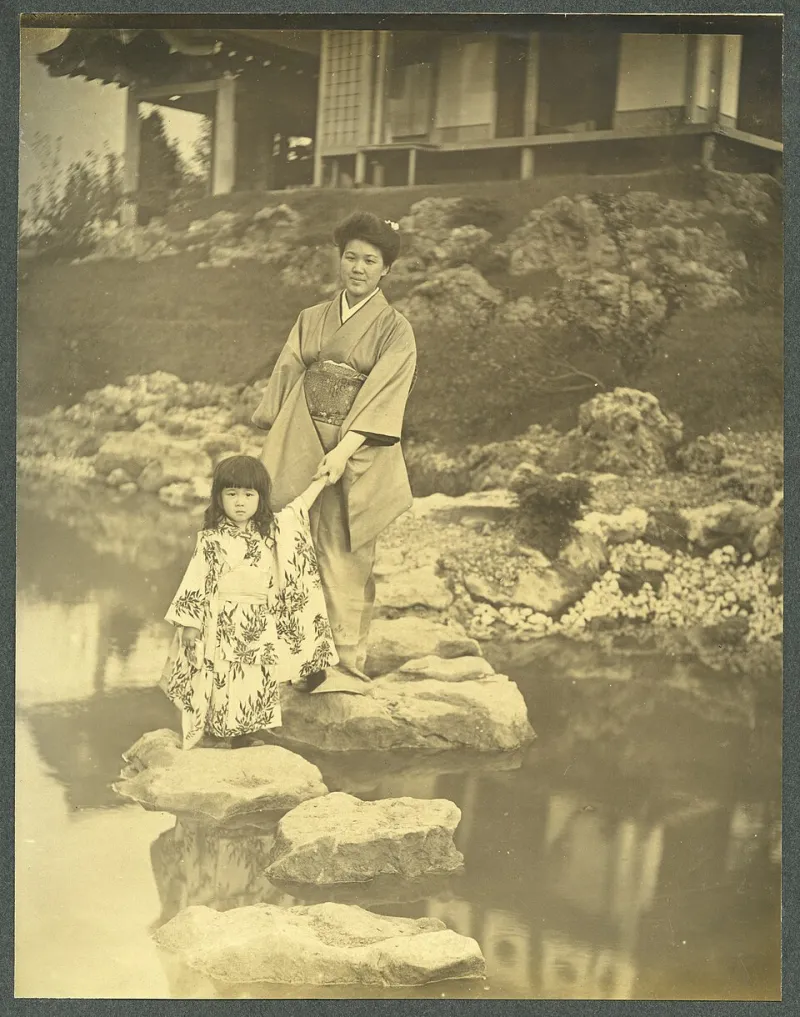
Photo: Unknown authorUnknown author, Public domain, via Wikimedia Commons
There's a Japanese TV show called Hajimete no Otsukai—loosely translated as My First Errand—that's been running since 1991. The premise is exactly what it sounds like: tiny children, sometimes as young as two or three years old, are sent on solo errands through their neighborhoods while cameras quietly follow from a distance. The kids navigate streets, talk to shopkeepers, and occasionally get a little lost before finding their way.
The show is enormously popular. And to a Japanese audience, it's heartwarming, not alarming.
To many American parents watching the same clips online—and plenty do, because the show found a global audience through streaming—the reaction is more complicated. Charming, yes. But also: Would I ever do that?
That gap in reaction tells you a lot.
The Independence Gap
Japan consistently ranks among the countries where children enjoy the most unsupervised freedom. Kids as young as six or seven routinely walk or take public transit to school alone. By middle school, many are responsible for cleaning their own classrooms, serving lunch to their classmates, and managing portions of their own schedules without adult direction.
In the US, the trajectory has moved in the opposite direction over the past few decades. Helicopter parenting, over-scheduled childhoods, and genuine safety concerns have combined to create a culture where children spend significantly less time in unsupervised, self-directed activity than previous generations did. A 2020 study from the American Psychological Association found that children today have markedly less free time and independent mobility than children in the 1970s and 80s.
The comparison isn't meant to shame anyone. American parents operate within a specific cultural and legal context—some states have actually had cases where parents faced investigation for allowing children to walk to a park alone. The pressures are real.
But the contrast with Japan is worth sitting with, because it raises a genuine question: What do children lose when they're never given the chance to navigate the world on their own?
What's Actually Behind Japanese Parenting Norms
It would be too simple to say Japanese parents just trust their kids more. The reality is more layered.
Part of what makes solo childhood independence workable in Japan is infrastructure. Japanese cities are designed with pedestrians in mind. Public transit is reliable, clean, and extensive. Neighborhoods tend to be walkable and relatively compact. The social fabric includes an implicit community responsibility for children—a cultural concept sometimes described as machi no me, or "the eyes of the town."
There's also a philosophical thread running through Japanese child-rearing that prizes jibun de dekiru—doing things yourself. From a young age, children are encouraged to struggle productively with tasks before adults step in. Teachers and parents often deliberately hold back help, not out of indifference, but out of a belief that working through difficulty is how children build genuine capability and confidence.
This connects to a broader cultural value around gaman—endurance, patience, and the ability to tolerate discomfort without immediately seeking relief. It's not about toughening kids up in a harsh way. It's about trusting that children are more capable than we sometimes give them credit for.
The Confidence Question
Researchers who study childhood development have been increasingly vocal about what over-protection costs kids in the long run. Jonathan Haidt and Greg Lukianoff, in their book The Coddling of the American Mind, argue that shielding children from manageable risk and failure actually undermines resilience rather than building it. Kids who never navigate difficulty on their own don't develop the internal belief that they can.
This isn't an abstract concern. Rates of anxiety among American children and adolescents have climbed steadily, and many child psychologists point to reduced autonomy as a contributing factor. When children never experience the small triumph of solving a problem independently—finding their way home, resolving a conflict with a friend without a parent mediating, figuring out how to cook something—they miss the accumulated evidence that they are capable people.
Japanese kids who've been riding trains since first grade have a very concrete, embodied sense of their own competence. That's not nothing.
What American Families Can Actually Do
None of this means American parents should immediately send their eight-year-olds off on solo subway rides. Context matters enormously. The infrastructure, the community norms, the specific neighborhood—these things are real variables.
But there are principles underneath the Japanese approach that translate, even when the specific practices don't.
Let kids struggle a little longer before you step in. When your child is frustrated with a task—a puzzle, a homework problem, figuring out how to open a jar—try waiting a beat before rescuing them. The struggle is often where the learning actually happens.
Give age-appropriate responsibilities with real stakes. Japanese kids serve school lunch, clean classrooms, and run errands because those things actually matter. Find the equivalent in your household: cooking a simple meal once a week, managing their own laundry, handling a small budget for their school supplies.
Expand the radius gradually. If a solo subway ride isn't realistic, maybe a walk to a friend's house three blocks away is. Or a trip to a nearby store with a cell phone but no parent. Independence can be built incrementally.
Resist the urge to over-explain and over-prepare. Japanese parents tend to send kids out with basic instructions and trust them to figure out the rest. American parenting culture often front-loads so much preparation that kids never develop the muscle of improvising.
Let natural consequences do some of the teaching. Forgot their lunch? They'll be hungry. Left their jacket at school? They'll be cold on the way home. These small discomforts are meaningful teachers.
A Different Vision of Childhood
At the heart of the Japanese approach is a belief that childhood is not just a period to be protected—it's a period to be practiced. Kids are practicing being people. They're practicing navigating the world, handling difficulty, building relationships, and developing a sense of who they are.
That framing doesn't mean Japanese parenting is perfect, or that it's directly transferable to American life. Every family operates within its own set of circumstances, values, and constraints.
But there's something worth borrowing in the underlying conviction: that children are more capable than our anxiety about them suggests, and that giving them room to prove it—even in small ways—is one of the most loving things we can do.