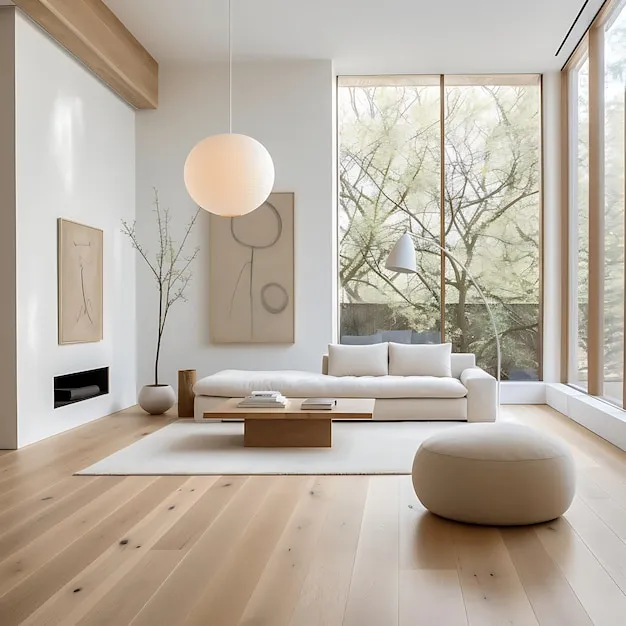
Change With the Seasons: The Japanese Home Ritual That Makes Every Month Feel New
Photo: Japanese home seasonal flower arrangement ikebana spring interior, via websta.me
Most American homes operate on two decorating seasons: before the holidays and after. You pull out the wreaths in November, box everything up in January, and that's more or less it until next year. But walk into a traditional Japanese home in, say, late September, and you might find a single branch of Japanese maple arranged in a ceramic vase, a small dish of chestnuts on the entryway shelf, and a scroll painting of the harvest moon hanging in the tokonoma alcove. Nothing excessive. Nothing shouted. Just a quiet nod to the fact that autumn is here, and it deserves to be noticed.
This isn't interior design in the Western sense. It's something older and more intentional—a practice rooted in the Japanese concept of shun (旬), which loosely translates to "the peak moment" of a season, and in the broader cultural appreciation for mono no aware, the bittersweet beauty of things that don't last. The idea is simple: your home should reflect what's happening outside your window. And because nature is always changing, your home should be too.
Why Japanese Families Rotate Their Décor
In Japan, seasonal awareness isn't decorative—it's deeply embedded in daily life. The food you eat, the clothes you wear, the greetings you exchange, and yes, the way you arrange your home all shift in response to the natural calendar. There are even specific terms for the micro-seasons within each quarter. The Japanese traditional calendar divides the year into 24 solar terms and 72 micro-seasons, each lasting just a few days. A period called Usui, for example, marks the time in late February when snow starts to melt and rain begins to nourish the earth. That's not just meteorological trivia—it's an invitation to notice.
For Japanese families, refreshing the home with seasonal elements is less about aesthetics and more about staying connected to something larger than themselves. It's a form of mindfulness, practiced not on a meditation cushion but in the act of placing a single stem of forsythia in a narrow vase by the front door.
The Four Seasons, Japanese Style
Each season brings its own visual vocabulary into the Japanese home.
Spring is the season of ikebana—the formal art of flower arrangement—though many families practice a looser, more intuitive version at home. Cherry blossoms (sakura) are the obvious star, but plum blossoms, tulips, and young green branches all make appearances. Colors tend toward pale pinks, creamy whites, and soft greens. A simple arrangement in a celadon vase, a small figurine of a rabbit or crane, and perhaps a piece of delicate indigo-dyed fabric as a table runner can transform a corner of your home into something that genuinely feels like spring.
Summer leans into coolness—both literally and visually. Glass vessels replace ceramic ones because they catch the light differently. Bamboo and woven rush materials appear in baskets and trays. Wind chimes (furin) hang near open windows, their sound meant to evoke a breeze even when there isn't one. The color palette shifts to deep indigos, clear blues, and the bright green of fresh bamboo leaves.
Autumn is arguably the richest season for Japanese home décor. The harvest moon (otsukimi) is celebrated in mid-September with offerings of sweet rice dumplings and arrangements of susuki (pampas grass). Maple branches, persimmons, chrysanthemums, and earthy tones in rust, ochre, and deep burgundy fill the home. This is also the season when lacquerware tends to come out—its warm, deep tones feel right against the cooling light.
Winter strips things back. Pine, bamboo, and plum—the "three friends of winter"—are classic motifs. A single pine branch in a tall vase, a small arrangement of dried botanicals, and perhaps a candle or two. The emphasis is on warmth, stillness, and the anticipation of what comes next.
What American Homeowners Are Taking From This
Interest in Japanese seasonal decorating has been quietly growing in the US for the past several years, driven partly by the broader wellness movement and partly by a growing fatigue with the disposable, trend-driven nature of mainstream home décor. People are looking for something that feels more grounded—and the Japanese approach offers exactly that.
Interior designers in cities like Portland, Seattle, and New York have been incorporating wabi-sabi aesthetics and seasonal botanical elements into their work for years. But what's newer is the DIY version of this practice—homeowners who aren't design professionals but who are deliberately creating small seasonal "stations" in their homes. A shelf near the entryway. A corner of the kitchen counter. A side table in the living room. These become the spots that change every four to six weeks, marking the passage of time in a way that feels personal rather than commercial.
How to Start Without Overthinking It
You don't need to study ikebana or source rare Japanese ceramics to bring this practice into your home. Here's a loose framework that works for most American households.
Pick one spot. The entryway is ideal because it's the first thing you see when you come home and the last thing you see when you leave. A small shelf, a console table, or even a windowsill will do.
Shop with the season, not against it. Farmers markets are your best friend here. Buy what's actually growing right now—sunflowers in August, bare branches in January, tulips in April. The whole point is that it reflects the real season outside, not a Pinterest approximation of one.
Keep it minimal. One or two elements is plenty. A single stem in a bud vase. A small bowl of seasonal fruit. A pinecone or two on a wooden tray. The Japanese aesthetic values restraint, and honestly, restraint is also just easier to maintain.
Let things go. This might be the hardest part for Americans raised in a more-is-more culture. When the flowers wilt, don't replace them immediately with something identical. Let the vase sit empty for a day or two. Notice the absence. That pause is part of the practice.
Don't perform it. This isn't for Instagram (though it will photograph beautifully). It's for you and the people you live with. The whole point is that it makes your home feel more alive—more attuned to the world outside—and that's a reward you feel, not one you post.
The Quiet Payoff
There's something that happens when you start living this way, even in a small corner of your home. Time starts to feel different. Not faster or slower, exactly—just more textured. You notice when the light changes in October. You get a small lift of anticipation when it's almost time to swap out the summer arrangements for something autumnal. You feel, in a modest but real way, like you're participating in the year rather than just moving through it.
That might sound like a lot to ask from a vase of pampas grass. But the Japanese have always understood that the small, repeated acts of daily life are where meaning actually lives. A home that changes with the seasons isn't just prettier. It's more honest—a true reflection of the world it exists in.
And in a culture that often tries to flatten time into one endless, climate-controlled present, that honesty is worth something.