Stop Rushing Your Bath: The Japanese Soaking Tradition That Puts American Wellness Culture to Shame
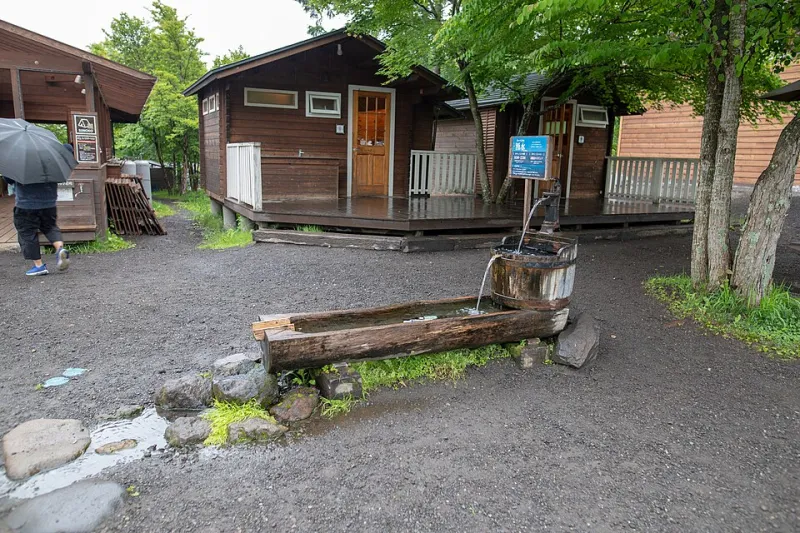
Photo: whity, CC BY 2.0, via Wikimedia Commons
Somewhere in America right now, someone is sitting in their car in a gym parking lot at 5:45 a.m., staring at a wellness app that has gamified their sleep score, scheduled their "recovery day," and sent them three notifications about their cortisol levels.
They are exhausted. And they are doing everything their wellness plan told them to do.
Meanwhile, in Japan, someone is lowering themselves into a wooden soaking tub filled with water just barely cool enough to tolerate, closing their eyes, and doing absolutely nothing for the next thirty minutes. No podcast. No tracking. No optimizing.
Guess which one feels better tomorrow.
Two Very Different Ideas About Rest
American wellness culture has a productivity problem. Even our relaxation has deliverables. We don't just go for a walk — we walk 10,000 steps. We don't just sleep — we chase a perfect sleep score. And when we do finally draw a bath, it's usually a "detox soak" with a specific timeline, a curated playlist, and a face mask timed to the minute.
Japanese bathing culture — rooted in the centuries-old tradition of the ofuro (home bath) and the communal onsen (hot spring) — operates from an entirely different premise. The bath is not a tool. It is the destination.
The Japanese relationship with bathing is less about what you get out of it and more about what you let go of in it. Tension, yes. The residue of the workday, absolutely. But also the compulsive need to be doing something. The bath is one of the few spaces in Japanese daily life explicitly designed for non-productivity, and that's treated as a feature, not a flaw.
The Architecture of Stillness
Traditional Japanese bathing spaces — whether a public sento bathhouse, a ryokan's private hinoki cypress tub, or simply the family bathroom at home — are designed with this philosophy baked into the walls.
Unlike most American bathrooms, which are squeezed into whatever square footage the builder had left over, Japanese bath spaces are intentionally separated from the toilet and sink areas. The ofuro room is its own thing. The tub itself is typically deeper than Western tubs, designed for sitting upright and submerging to the shoulders rather than lying back. You wash your body before you get in — the bath is for soaking, not scrubbing — and then you ease into water that's genuinely hot, somewhere between 104°F and 110°F.
At a proper onsen, the experience expands further. Mineral-rich geothermal water, sometimes outdoors, sometimes surrounded by cedar or bamboo or mountain views. Multiple pools at different temperatures. And always, always, the unspoken agreement that this is not the place to be on your phone.
What happens in that heat, in that quiet, is something that's hard to explain until you've experienced it. The nervous system genuinely settles. Not the way it does after a glass of wine (foggy, temporary) but in a way that feels almost structural — like your body remembered how to be at rest.
The Family Dimension That Americans Miss
Here's a piece of Japanese bathing culture that rarely makes it into American wellness content: the ofuro is often a family ritual.
In many Japanese households, the same bath water is shared by the whole family in succession — parents, children, grandparents — each person soaking in the same tub over the course of an evening. The water is kept hot with an insulated lid between uses. It's efficient, yes, but it's also something more than that. It's a shared nightly rhythm, a quiet point of connection in a day full of separate schedules.
For parents of young children especially, bath time in Japan is often one of the most tender parts of the day — a chance to slow down with a kid who's been at school, to talk without the distraction of screens or mealtimes, to just be together in warm water with nowhere else to be.
This is so far from the "get the kids clean and into bed" energy that bath time carries in most American households that it almost sounds like a different activity. And in a way, it is.
Seasonal Bathing: The Practice You've Never Heard Of
One of the most quietly beautiful aspects of Japanese bath culture is its connection to the seasons — something that lines up perfectly with the broader Japanese philosophy of living in rhythm with the natural world.
Different times of year bring different additions to the bath. In winter, yuzu — a Japanese citrus fruit — is floated in the water on the solstice, filling the bathroom with a scent that smells like a cross between lemon and grapefruit and something ancient. In summer, iris leaves are added for their sharp, clean fragrance. In autumn, chrysanthemum petals. Each addition marks the turning of the year in a way that's sensory and grounding.
For Americans trying to bring this practice home, this is one of the most accessible entry points. You don't need a Japanese soaking tub or a mountain hot spring. You need a bathtub, some yuzu essential oil (or an actual yuzu if you can find one at a Japanese grocery store), and the willingness to let December feel like December.
How to Actually Try This
Let's be real: most American bathrooms are not set up for meditative soaking. The tubs are shallow, the water pressure is aggressive, and the whole space tends to feel like a staging area rather than a sanctuary.
But you can work with what you have. A few things that genuinely help:
Heat is non-negotiable. American bath culture tends toward lukewarm. Japanese soaking is hot — intentionally, therapeutically hot. If you're not slightly pink when you get out, you didn't go warm enough. (Consult your doctor if you have cardiovascular concerns, obviously.)
Wash before you soak. This is more than hygiene — it's a mental transition. The act of cleaning yourself before getting in the tub signals that what follows is different. You're not bathing. You're resting.
Leave the phone outside the room. Not on silent. Outside. The whole point is the absence of input.
Give it time. Twenty minutes is the minimum. Thirty is better. This is not a quick shower with extra steps — it's a different category of experience that requires duration to work.
Add something seasonal. Even a few drops of an essential oil that matches the time of year — pine in winter, citrus in spring, something floral in summer — turns an ordinary soak into something that feels intentional.
The Wellness Metric That Can't Be Tracked
Here's the uncomfortable truth about Japanese bath culture for American wellness enthusiasts: its benefits don't fit neatly into a dashboard.
You can't quantify the way thirty minutes in hot water with no agenda makes you feel more like yourself. You can't A/B test the effect of sharing a bath ritual with your kids on your relationship with them ten years from now. You can't track the cumulative impact of one daily practice that tells your nervous system, reliably, that the day is over and you are safe.
But those things are real. Arguably more real than your sleep score.
The Japanese figured this out a long time ago. The bath isn't part of a wellness routine. It is the routine — the whole point, the daily reminder that taking care of yourself isn't something you optimize. It's something you do slowly, warmly, and without an agenda.
Fill the tub. Get in. Stay a while.