おもちゃが少ない部屋で、子どもはもっと遊ぶ:日本の家が知っていること
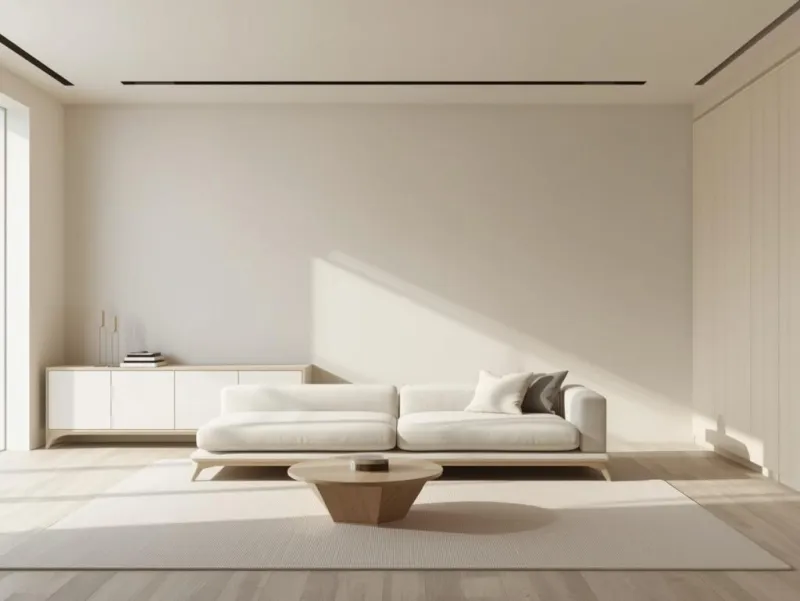
Photo: minimalist Japanese children's playroom wooden toys natural light tidy, via cozylumiere.com
Walk through the toy aisle at a Target on a Saturday afternoon and you'll feel it—that particular American anxiety about giving kids enough. Enough stimulation, enough options, enough variety to keep them engaged, developing, happy. The shelves are designed to feed that feeling. So are the birthday party traditions, the holiday hauls, the subscription boxes that arrive monthly with more plastic pieces to add to the pile.
Now picture a family home in Osaka. A six-year-old's play area might contain a wooden train set, a small basket of art supplies, a few well-loved stuffed animals, and a stack of picture books. That's roughly it. And the child in that room? Often deeply, quietly absorbed.
もったいない: More Than Just "Don't Waste"
The Japanese concept of mottainai (もったいない) is usually introduced to Western audiences as an environmental idea—a philosophy of not wasting resources, of respecting the full life of objects. And that's accurate as far as it goes. But mottainai runs deeper than recycling ethics.
At its core, mottainai is about recognizing value. When something is plentiful, its value becomes invisible. When it's scarce or carefully chosen, you actually see it. Japanese families who apply mottainai to their children's toys aren't being cheap or withholding—they're making a deliberate choice to let each object carry real weight in a child's imaginative life.
A toy that lives in a pile of forty others gets picked up, dismissed, and dropped in under three minutes. A toy that lives in a small, considered collection gets known. It gets used in new ways, repurposed, incorporated into games that the toy's designers never imagined. The scarcity is the point.
What Child Development Research Actually Shows
This isn't just cultural aesthetics—there's a growing body of research supporting the idea that toy abundance may work against the very development parents are trying to support.
A widely cited study from the University of Toledo found that toddlers in a room with four toys played more creatively, for longer, and with greater focus than toddlers given sixteen toys. The researchers noted that with fewer options, children engaged in more complex, sustained play—the kind that builds executive function, problem-solving, and imagination.
Dr. Stuart Brown, founder of the National Institute for Play, has argued for years that open-ended play—the kind that happens when a child has to invent the rules—is more developmentally rich than play that's guided by a toy's built-in function. A plastic set that does one thing teaches a child that one thing. A wooden block does whatever the child decides.
Japanese toy curation tends to favor exactly these kinds of open-ended objects: natural materials, simple shapes, things that require the child to bring the imagination rather than just react to the toy's prompts.
The Room Itself as a Message
In Japanese home design, the physical environment is never just a backdrop—it's an active participant in how a family lives. This is part of why the minimalist approach to children's spaces isn't treated as deprivation but as design. The room's emptiness creates room for something else: concentration, invention, the particular kind of boredom that tips over into genuine creativity.
American children's bedrooms, by contrast, have trended toward maximalism for decades. Themed rooms, dedicated storage systems for hundreds of small pieces, LED lighting, screens on multiple surfaces. The intention is generous. The effect, developmental researchers suggest, may be overstimulating in ways that actually reduce a child's ability to self-direct.
Japanese parents who keep children's spaces spare aren't doing it because they can't afford more. They're doing it because the spare room is understood to be better. That's a genuinely different value system, and it's one that American parents—increasingly exhausted by the volume of stuff in their homes—are starting to find persuasive.
Rotation as a Practice
One practical technique that Japanese families use, and that American parents have begun adapting, is toy rotation. Rather than having everything available all the time, a portion of a child's toys are stored out of sight and cycled in periodically. When a toy reappears after a few weeks away, it's met with something close to the enthusiasm of a new toy—but without the cost or the additional clutter.
This practice embodies mottainai beautifully: nothing is wasted, everything gets its full life, and the child's relationship to each object stays fresh. It also models something useful about consumption itself—that having everything at once isn't actually the peak experience. Anticipation, return, rediscovery: these are real pleasures.
What American Parents Are Actually Saying
In parenting communities across the US—from minimalism-adjacent Facebook groups to the comment sections of home organization accounts—there's a detectable shift happening. Parents are describing something that sounds a lot like relief: the relief of buying less, curating more, and watching their kids actually play with what's there instead of drifting through an overwhelming sea of options.
Some of this is driven by environmental consciousness, some by budget pressure, some by the growing cultural visibility of Japanese design philosophy. But a lot of it is simply parents trusting what they're observing in their own homes: that the stuffed-to-capacity toy chest isn't delivering the developmental richness they were promised. That their kid is happiest with a cardboard box, a stick from the backyard, or the same three LEGO pieces rearranged for the hundredth time.
Japanese families have been watching that same kid for generations. They just built the room around it.
Starting Small
You don't have to gut your child's bedroom to take something from this. The mottainai approach isn't about austerity—it's about intentionality. A few starting points:
Do one honest edit. Go through the toys with your kid and identify what actually gets played with. Donate the rest, guilt-free. You're not taking something away—you're making what remains visible.
Try a two-week rotation. Box up half the toys and put them somewhere out of sight. See what happens to the play in the room.
Prioritize open-ended materials. Art supplies, building blocks, simple dolls or figures without a predetermined narrative—these tend to outlast and out-perform their flashier counterparts in actual use.
The Japanese home isn't sparse because it's indifferent to children. It's sparse for them. That's the shift in thinking that changes everything.