The Space Between Outside and Home: What Japan's Genkan Can Teach American Families About Arriving
Think about what happens in the sixty seconds after your family walks through the front door. Shoes hit the floor wherever. Bags drop in the middle of the hallway. Someone's already asking what's for dinner before the door has finished closing. The energy of the outside world—the commute, the school day, the argument in the parking lot—walks right in with everyone and immediately starts contaminating the home atmosphere.
This isn't a discipline problem. It isn't a tidiness problem. It's a design problem. And Japan figured out the solution centuries ago.
What the Genkan Actually Is
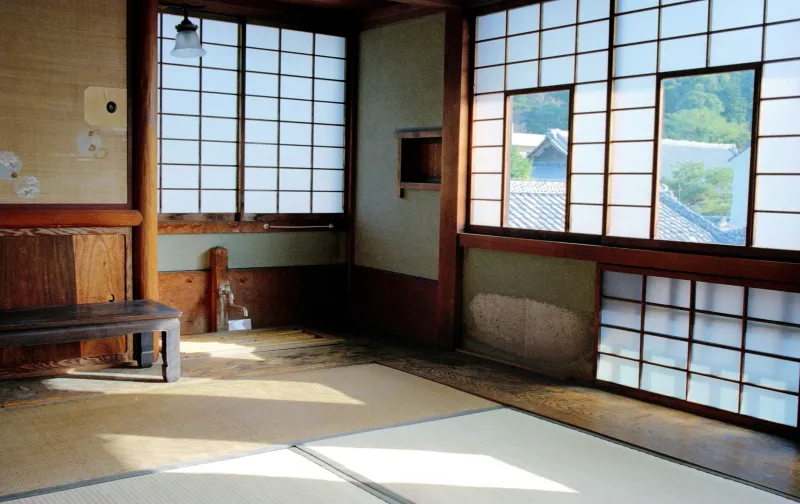
The genkan (玄関) is the entryway space found in virtually every Japanese home, from modest apartments to sprawling countryside houses. It's not just a foyer. It's a zone of transition—architecturally and psychologically distinct from both the outside world and the interior of the home.
In traditional design, the genkan sits at a slightly lower floor level than the rest of the house. You step in from outside, remove your shoes on this lower platform, then step up into the home itself. That small physical elevation—sometimes just an inch or two—marks a clear boundary. You are not inside yet. You are between.
Shoes are left in the genkan, often arranged neatly in a getabako (shoe cabinet). Outdoor bags may be set down here. Coats hang nearby. The idea is that everything carrying the energy of the outside world stays in this buffer zone and does not proceed further into the home.
But the genkan isn't just about cleanliness, though that's part of it. It's about the ritual of arrival. It asks you, physically and mentally, to pause before you enter.
Why Your Entryway Is Probably Failing You
Most American homes were not designed with this kind of transition in mind. The front door opens directly into a living room, a hallway, or sometimes straight into the kitchen. There's no architectural suggestion to pause, no built-in cue that says you are moving from one world to another.
The result is predictable: the stress of the day doesn't get left at the door because there's no door to leave it at. Kids walk in still wound up from school. Parents arrive still mentally at the office. The home absorbs all of it, and the family wonders why evenings feel chaotic even when nothing particularly chaotic is happening.
The entryway in many American homes has become a dumping ground—mail, sports equipment, random charging cables, a coat that's been on the same hook since October. It communicates nothing about transition. If anything, it communicates that home is just an extension of everything else.
The Psychology of the Threshold
There's real science behind what the genkan is doing intuitively. Environmental psychologists have long studied how physical spaces cue behavior and mental states. Thresholds—literal doorways and transition zones—are particularly powerful because they signal to the brain that a context shift is happening.
When there's no meaningful threshold, no cue to shift, the brain doesn't shift. You carry the previous context into the new one. This is why you can walk into a room and forget why you went there (the doorway effect, famously studied by Gabriel Radvansky), but it's also why you can walk into your home and still feel like you're at work.
The genkan creates a mandatory micro-moment of context-switching. The act of removing shoes, stepping up, perhaps exchanging a brief greeting—these are small rituals that tell the nervous system: this is different now. You can change modes.
How to Build a Genkan Mentality Without Renovating Your House
You don't need a Japanese architect or a complete home renovation to apply this principle. What you need is intentionality about what your entryway communicates and what happens there.
Define the zone. Even in a home where the front door opens directly into the living room, you can create a visual and functional threshold. A rug, a bench, a small cabinet—these elements can demarcate a zone that is not quite inside yet. The brain responds to visual boundaries even when they're not architectural.
Make shoes non-negotiable. This is the most direct import from genkan culture, and it works. Keeping a shoe rack or basket at the door and establishing a no-shoes-past-this-point rule creates an immediate physical ritual of transition. It also, genuinely, keeps your floors cleaner—but more importantly, the act of removing shoes is a small ceremony that signals the shift has happened.
Clear the clutter with purpose. A genkan is not a storage unit. It holds only what is needed for the transition in and out: shoes, keys, bags, seasonal outerwear. Everything else goes elsewhere. When your entryway is clear, it communicates calm. When it's chaotic, it front-loads stress before your family has even taken their coats off.
Create a greeting ritual. In many Japanese homes, arrival is acknowledged—okaeri (welcome back) answered with tadaima (I'm home). It sounds small, but it's a social acknowledgment that someone has arrived and the household is aware of it. American families who build even a simple version of this—looking up from screens, making eye contact, saying something—report that evenings feel less disconnected.
Add one sensory anchor. A scent (a candle, a diffuser), a sound (soft music that only plays in the evening), a visual element that you only see when you arrive home—these sensory anchors can deepen the transition cue. Over time, your nervous system starts to associate these signals with "home mode."
The Arrival That Changes the Evening
Here's the thing about the genkan that doesn't get talked about enough: it's not primarily a design feature. It's a values statement. It says that home is different from everywhere else. That what happens inside these walls is worth protecting from the noise and stress of the outside world. That arriving home is an event worth marking.
American family life has gotten very good at optimizing the inside of the home—the kitchen layout, the living room furniture arrangement, the kids' bedroom organization. But we've largely ignored the threshold, the moment of arrival, the transition itself.
Japan has known for centuries that how you enter a space shapes what happens once you're inside. Your entryway doesn't need to be Instagram-perfect. It just needs to mean something.