The Room That Does Nothing—and Changes Everything: Japan's Secret to a Calmer Family Home
The Urge to Fill Everything
Walk into almost any American home and you'll notice something: every surface has a purpose. The entryway has a console table. The console table has a lamp, a bowl for keys, maybe a little succulent. The corner near the window? That's where the reading chair went. And the reading chair has a side table. And the side table has a coaster, a candle, and three books you haven't opened since 2021.
We are, culturally speaking, a nation of fillers. Square footage costs money, and leaving any of it unoccupied feels almost morally wrong—like wasted potential. Interior design culture pushes us toward maximizing every corner, every nook, every awkward little alcove between the closet and the wall.
Japanese homes take a different view. And once you understand why, it's hard to unsee.
What the Empty Corner Actually Is
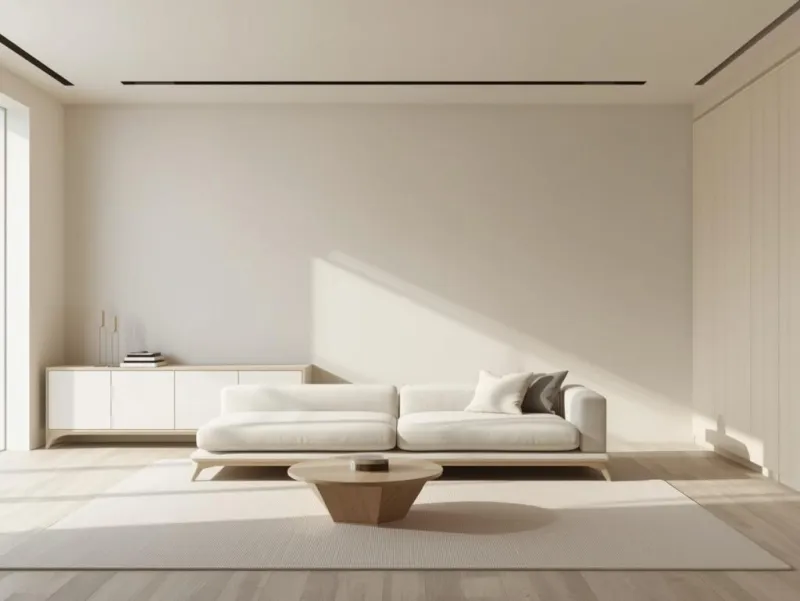
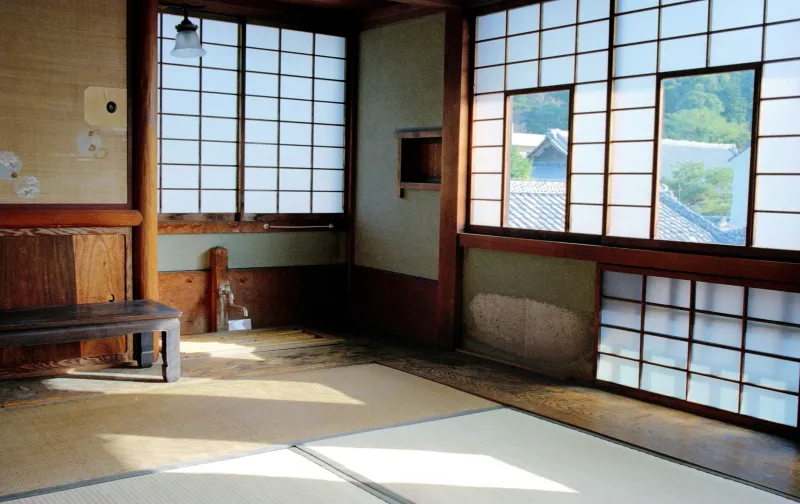
In traditional Japanese home design, there's a long-standing appreciation for what might be called yohaku—literally, the space left over. It's the blank margin on a scroll painting, the silence between notes in music, the patch of raked gravel in a garden that surrounds nothing. It's not accidental emptiness. It's deliberate.
In a family home, this philosophy often shows up as a corner or section of a room that isn't assigned a permanent function. It might hold a single seasonal arrangement in autumn—a branch, a small gourd, a folded cloth in deep red. In winter, maybe a paper lantern. Come spring, nothing at all. The space breathes with the calendar.
This isn't the same as a junk corner, which most of us are already familiar with. The distinction matters enormously. A junk corner is empty of intention. A yohaku corner is full of it.
Why Families Actually Need Undesignated Space
Here's what happens in a home where every spot has been assigned a job: spontaneity disappears. When your kids want to build a fort, there's nowhere to build it without dismantling something else first. When your family wants to spread out a puzzle on a Saturday afternoon, you have to clear the coffee table, move the decorative tray, find somewhere to put the remote controls. The friction is small, but it accumulates.
Japanese families who maintain flexible, undesignated spaces report something that sounds almost too simple to be profound: they use those spaces constantly. The empty corner becomes the place where a child spreads out their art project. Where a parent lays out a yoga mat on a Tuesday morning. Where the whole family gathers around a game on the floor because the floor is actually available.
The space doesn't do one thing. It does whatever the family needs it to do right now. That flexibility is the point.
The Mental Health Angle Nobody Talks About
Environmental psychologists have spent years studying how cluttered or overstimulating spaces affect the brain—and the findings are pretty consistent. Visual complexity raises cortisol levels. When your eyes have nowhere to rest, your nervous system stays subtly activated. You feel it as low-grade stress, the kind you can't quite name but can't quite shake either.
An intentionally empty corner works as a kind of visual exhale. It gives your brain permission to stop processing. In a busy family home—where backpacks get dropped and snack wrappers accumulate and someone always seems to be making noise—a single quiet, uncluttered space can shift the emotional temperature of an entire room.
Japanese design has understood this intuitively for centuries. The concept of ma, which roughly translates to meaningful negative space, isn't just an aesthetic preference. It's a recognition that absence can be as powerful as presence. The gap is part of the composition.
How American Families Can Actually Try This
Let's be honest: telling an American family to just leave a corner empty is a hard sell. Our instinct is to immediately imagine what could go there. A plant? A small bookshelf? One of those aesthetic little ladders draped with blankets?
The practice requires a kind of active resistance. Here's a way to start that doesn't feel like deprivation.
Pick one corner. Just one. Not the whole living room, not a full redesign. Find a corner that currently holds something you don't love—a pile of things waiting to be dealt with, a piece of furniture you keep because you don't know where else to put it. Clear it.
Sit with the emptiness for two weeks. This is the hard part. Don't immediately fill it. Notice what your family gravitates toward. Does your kid start sitting there? Does your partner use it to stretch after work? Does the dog claim it as a nap spot? The space will tell you what it wants to be.
If you add anything, make it seasonal and temporary. A single vase with one stem. A small object that means something to your family right now. Something you'll swap out in a month or two. The impermanence is the whole point—it keeps the space from becoming just another permanent fixture.
Protect it. This is the ongoing work. Every few weeks, something will migrate into that corner. A bag, a box, a random piece of sporting equipment. The practice is in moving it back out.
What Gets Stronger When You Stop Filling
Families who've experimented with this—even informally, even just as a personal design experiment—often describe a shift that surprises them. The empty space becomes a kind of gathering point. Not because anything is there, but because nothing is in the way.
There's something in that worth paying attention to. So much of family life is managed, scheduled, optimized. Playdates get calendared. Dinners get planned. Even downtime can start to feel like a line item. A space that belongs to no specific purpose quietly resists all of that. It says: this part of the house is just for whatever happens next.
In Japan, that philosophy has a home in the design of the house itself. Maybe it's time American families gave it one, too.
Start small. One corner. See what your family does with it.