How Japanese Families Actually Keep Phones Off the Dinner Table (It's Not What You Think)

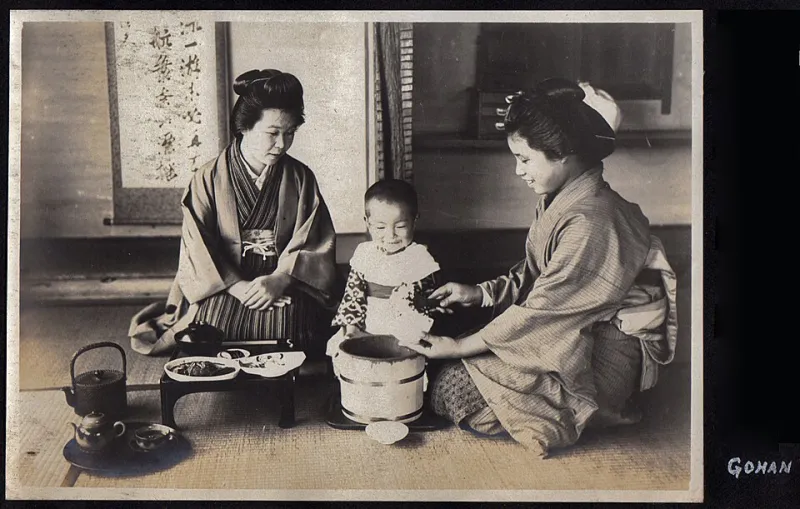
Photo: Japanese family eating dinner together at table without phones warm lighting, via thestrongtraveller.com
Ask any American parent about screens at dinner and you'll get a sigh, a story, or both. The phone on the table. The battle over just one more minute. The teenager who technically put the phone away but keeps glancing at it every thirty seconds like it might escape.
We've tried rules. We've tried phone baskets. We've tried leading by example—then quietly checked our own notifications the moment someone went to refill their water.
So when research and cultural observers keep noting that Japanese families tend to have better success with screen-free mealtimes, it's worth asking: what are they actually doing differently?
The answer is more layered than "stricter parents" or "better discipline." It involves cultural values that predate smartphones, physical design choices that make screen use feel socially awkward, and a fundamentally different understanding of what dinner is for.
Mealtime as a Social Contract
In Japan, the family meal carries a weight that goes beyond nutrition. The concept of shokuji (食事) isn't just "eating"—it carries connotations of shared experience, gratitude, and relational maintenance. The ritual phrases that bookend every meal—itadakimasu before eating, gochisousama deshita after—aren't just politeness. They're tiny ceremonies that mark the meal as something set apart from ordinary time.
When mealtime is framed as a ritual rather than just a refueling stop, the introduction of a phone feels more like a disruption. Not because someone made a rule about it, but because the whole family shares an understanding that this time is for us.
American mealtimes, by contrast, have gradually been reframed—by busy schedules, by TV dinner culture, by the normalization of eating alone or on the go—as primarily functional. You eat when you can, where you can. And if that's the underlying message, it's hard to argue that a phone is any different from a magazine or a crossword puzzle.
Culture doesn't change overnight. But understanding the gap is the first step toward narrowing it.
The Kitchen Doesn't Come to the Table
Here's a design detail that American families rarely consider: in many Japanese homes, the kitchen and dining area are more deliberately separated than in the open-concept layouts that have dominated American home design for the past two decades.
That separation matters more than it seems. In a home where the kitchen is physically distinct from the dining space, the act of sitting down to eat is a transition. You leave one zone and enter another. The dining table exists for one purpose.
In open-concept American homes, the table is often an extension of a larger multi-use space. The kitchen counter, the living room, the dining table—they flow together visually and functionally. Checking your phone at dinner doesn't feel different from checking it anywhere else in the room, because the room is all one room.
Japanese apartment layouts, even small ones, tend to preserve some version of this separation. The dining table is a destination, not just a surface.
What Japanese Parents Actually Say
Speaking with Japanese parents—both those living in Japan and Japanese-American families in the US—a few consistent themes come up.
First, modeling matters enormously, and it starts early. Japanese parenting culture places significant emphasis on mimicry as a learning mechanism. Children are expected to observe and absorb adult behavior. If parents consistently put their phones away during meals from the time kids are toddlers, it becomes normalized before it ever becomes a battleground.
Second, the framing is different. Rather than "no phones at dinner" being a rule imposed from above, it tends to be communicated as a matter of manner—of what it means to respect the people you're eating with. The language of respect (sonkei, reisetsu) carries enormous weight in Japanese family dynamics. Pulling out a phone during a shared meal isn't just rude; it signals that you don't value the people in front of you. That's a much heavier social cost than breaking a household rule.
Third—and this one surprised some American parents we spoke with—Japanese families talk about food more at the table. Commenting on the meal, asking about specific ingredients, expressing appreciation for what was cooked: this is standard dinner conversation, not optional. When the meal itself is a topic of engaged discussion, there's simply less of a vacuum for phones to fill.
The Practical Toolkit
If you're an American family who has tried the "no phones at dinner" rule and watched it collapse, here are some approaches drawn from Japanese household habits that go beyond just making a new rule.
Start with itadakimasu. You don't have to use the Japanese word (though your kids might think it's kind of cool). The point is a shared verbal moment before anyone picks up a fork—a signal that the meal is beginning and that everyone is present. Even something as simple as "okay, let's eat" said together can create a threshold effect.
Move the chargers. In many Japanese homes, phones charge in a specific spot—often a bedroom or an entryway—not on the kitchen counter or the dining table. If the phone isn't within reach during dinner, the habit of reaching for it doesn't get triggered. Proximity is a more powerful behavioral cue than willpower.
Make the food worth talking about. This sounds simple, but it works. Trying a new recipe, incorporating a seasonal ingredient, plating something a little more intentionally—these small choices give the family something to actually discuss. Conversation is the best screen replacement, and it needs content.
Separate the eating space visually. If you have an open floor plan, you can still create a psychological boundary around the dining table. A pendant light directly over the table, a rug underneath it, chairs that face inward rather than toward the living room—these visual cues signal that the table is its own zone.
Give it a season, not a lecture. Japanese parenting tends to favor gradual normalization over direct confrontation. Instead of announcing a new phone policy at dinner, just start doing it—quietly, consistently, without making it a big deal. Let it become the household's way of doing things before it ever needs to be a rule.
The Bigger Picture
The Japanese dinner table isn't perfect. Screens are everywhere in Japan, and plenty of Japanese families struggle with the same dynamics American ones do. This isn't a story about a flawless culture—it's a story about specific practices that seem to work, and why.
What stands out is that the most effective approach isn't enforcement—it's meaning. When a family genuinely understands the meal as a shared ritual worth protecting, the phone becomes the interruption rather than the default. Building that understanding takes longer than buying a phone basket, but it actually holds.
And honestly? The food probably tastes better when you're paying attention to it.