When Goodbye Is the Whole Point: How Japanese Families Find Beauty in Endings
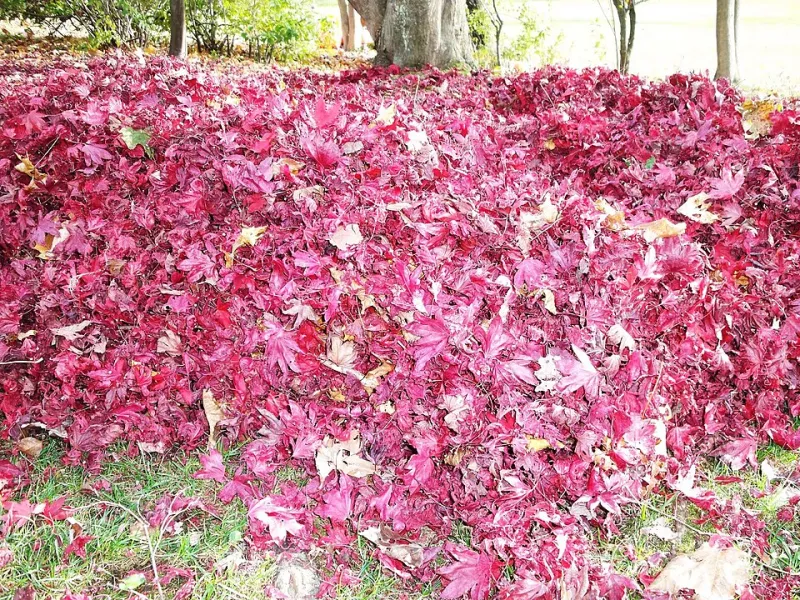
Photo: EgorovaSvetlana, CC BY-SA 4.0, via Wikimedia Commons
There's a certain kind of sadness that doesn't really have a name in English. It's not grief, exactly. It's not disappointment. It's that hollow-sweet feeling you get when you're watching the last fireflies of summer blink out over the backyard, knowing they won't be back for another year. Or sitting at the kitchen table on your kid's last night before they leave for college, not quite ready to say goodnight.
Japanese has a word for that feeling: nagori (名残).
And unlike in America, where we tend to rush past that feeling toward the next exciting thing, Japanese culture treats nagori as something worth sitting inside for a while.
What Nagori Actually Means
Nagori is one of those Japanese words that resists a clean translation. At its core, it describes the lingering attachment to something that is ending or has just ended — a season, a relationship, a phase of life. It's the feeling of the last cherry blossoms clinging to the branch. The final cup of tea shared with a friend who's moving away. The quiet in the house after the holiday guests have gone.
Historically, the word appears in Japanese poetry and literature as far back as the Heian period, often tied to the changing of seasons. But it's not just a literary concept — it's woven into how Japanese families actually move through time together.
Nagori isn't wallowing. It's witnessing. There's a meaningful difference.
The American Reflex to Move On
In the US, we tend to treat endings as problems to solve or stages to push through. Graduation parties are immediately followed by move-in day planning. Retirement parties pivot to bucket list conversations. Even grief is often framed through the lens of "stages" to complete, with recovery as the goal.
There's nothing wrong with optimism or forward momentum. But when we're always sprinting toward the next beginning, we skip something important: the chance to actually feel the weight of what's leaving.
Families lose that weight when they ignore it. Kids grow up without learning that change is allowed to be hard and beautiful at the same time. Parents miss the chance to model emotional honesty when they perform cheerfulness through every transition.
Nagori offers a different way.
How Japanese Families Actually Practice This
In Japan, the shift between seasons is treated as a genuine cultural event, not just a calendar marker. When summer ends, families might gather for one final meal featuring foods associated with that season — fresh corn, cold somen noodles, chilled tofu — as a deliberate acknowledgment that this particular version of things is over.
Autumn's last maple leaves are photographed and pressed not just for decoration but as a kind of ritual honoring. The last day of school before a long break might include a quiet moment of reflection alongside the excitement of freedom ahead.
These aren't grand ceremonies. They're small, intentional pauses that communicate something profound to everyone in the family: this mattered, and we're not going to pretend it didn't.
Parents use nagori-style language with children during transitions too. Rather than rushing a child past sadness — "Don't cry, this is a happy day!" — a Japanese parent might sit with the child and say something closer to: it makes sense to feel both things at once.
What This Could Look Like in Your Home
You don't need to speak Japanese or overhaul your family's entire emotional culture to bring nagori into your life. It's more about slowing down at the edges of things.
Mark the last, not just the first. We celebrate the first day of school with photos and fanfare. What about the last day of elementary school? The last soccer season in middle school? The last summer before high school? These endings deserve a moment — a special dinner, a walk somewhere meaningful, a photo that acknowledges this chapter is closing.
Let the sad and the happy coexist. When a family pet dies, a grandparent moves to assisted living, or a neighborhood friend relocates across the country, resist the urge to immediately pivot to silver linings. Sit in the nagori together. Name it. Say out loud: "I'm going to miss this. It's okay that this is hard."
Create seasonal send-offs. At the end of each season, do something that honors what that season brought your family. A summer-closing cookout where everyone shares one favorite memory from the past few months. A winter-ending soup night before the first warm week arrives. These rituals don't have to be elaborate — they just have to be intentional.
Make space in your home for what's passing. Japanese homes often feature a tokonoma — an alcove where seasonal objects are displayed to mark the current moment in time. You don't need a dedicated architectural feature, but a small shelf or corner where you place something seasonal, something temporary, something that will eventually be put away — that's a physical reminder that things come and go, and both parts are worth honoring.
The Counterintuitive Gift of Endings
Here's what's strange about nagori: practicing it doesn't make you sadder. It actually makes you more present.
When you know you're going to honor the end of something, you start paying closer attention while you're still in the middle of it. You notice the last week of summer differently when you know you're going to mark its passing. You listen a little harder to your kid's stories from school when you're aware that this particular version of them — this age, this grade, this set of friendships — won't exist in exactly this form much longer.
Nagori trains your attention. And a family that pays attention to each other is, in the end, a family that stays connected through all of it — the beginnings, the middles, and yes, the goodbyes.
American culture hands us a lot of tools for celebrating what's arriving. Nagori hands us something rarer: a way to honor what's leaving without pretending it didn't matter.
Maybe that's the beginning we actually need.